

Biometric wristbands which can "see internal" the bodies of humans with autism and predict dramatic behaviour changes will be commercially available within two to 5 years.

Dr Matthew Goodwin, an expert on wearable bio sensors in autistic sufferers, claims that the capability to measure minute physiological adjustments inclusive of surface skin temperature and coronary heart charge may want to remodel the lives of humans with autism.
Dr Goodwin and his team from Boston's Northeastern university are operating with a light-weight wristband, much like an eye fixed, which measures 4 physiological indicators – coronary heart price, surface pores and skin temperature, sweating and the 3 dimensional moves of the limb it really is carrying the sensor.
They may be also exploring methods to circulate records from wristbands live to mobile telephones, through an app. This will enable a member of the family or teacher to carefully reveal the individual they're worrying for.
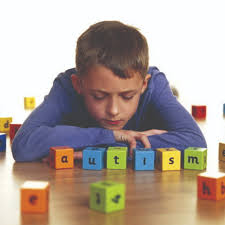
Human beings with excessive autism, who're frequently not able to talk through words or body language, are apt to dramatic behavioural adjustments that include self harm, aggression and running away.
Thru ten years of studies in the united states, Dr Goodwin and his team have set up that body alerts may be capable of predict these occasionally violent changes earlier than they show up, permitting carers the possibility to take appropriate movement.
"The autistic children we're working with can't tell us what's going on. They can't say they have a headache, or 'it's too loud in here' or 'I don't like this teacher'," he said.
"If we want to understand them, we need to look at what their body is telling us – and we need to do this in a gentle, unobtrusive way."
humans maintaining fingers in supportBiometric facts could assist carers better aid autism patients
for example, a easy visualisation of colors may want to denote the level of agitation – crimson might be used as a caution of behavioural change, and blue may be used to indicate below-arousal, allowing a carer to recognize while the character is bored and missing stimulation.
Information from the wristbands may also be accrued over time and saved on a relaxed server, allowing carers to recognize the bigger photograph of ways the individual responds to exclusive conditions, and to understand what interventions work pleasant.
"I want to be clean that we are not studying minds. Bio sensors are not magic – they still need a human to interpret them."
He said that his crew could be working with manufacturers to in addition increase this era in order that it is able to be autism-precise.
The studies has been welcomed via Jane Carolan, director of patron offerings at Wirral Autistic Society, so one can be showcasing the technology at its Autech 2015 conference on autism and technology in Manchester on 1 October.
"When you work with people with severe autism, as we do, you see the dramatic difference that assistive technology can make to their quality of life. iPad apps are now, literally, giving a voice to people who have never spoken. Robots are helping autistic children learn to play peek-a-boo. Who knows where this innovation may lead us," she said.
"Assistive technologies can be truly life-changing and we feel it is part of our mission as an autism charity to ensure everyone has access this information and is part of the debate about how we want to support people with autism in the future."

Dr Matthew Goodwin, an expert on wearable bio sensors in autistic sufferers, claims that the capability to measure minute physiological adjustments inclusive of surface skin temperature and coronary heart charge may want to remodel the lives of humans with autism.
Dr Goodwin and his team from Boston's Northeastern university are operating with a light-weight wristband, much like an eye fixed, which measures 4 physiological indicators – coronary heart price, surface pores and skin temperature, sweating and the 3 dimensional moves of the limb it really is carrying the sensor.
They may be also exploring methods to circulate records from wristbands live to mobile telephones, through an app. This will enable a member of the family or teacher to carefully reveal the individual they're worrying for.
Human beings with excessive autism, who're frequently not able to talk through words or body language, are apt to dramatic behavioural adjustments that include self harm, aggression and running away.
Thru ten years of studies in the united states, Dr Goodwin and his team have set up that body alerts may be capable of predict these occasionally violent changes earlier than they show up, permitting carers the possibility to take appropriate movement.
"The autistic children we're working with can't tell us what's going on. They can't say they have a headache, or 'it's too loud in here' or 'I don't like this teacher'," he said.
"If we want to understand them, we need to look at what their body is telling us – and we need to do this in a gentle, unobtrusive way."
humans maintaining fingers in supportBiometric facts could assist carers better aid autism patients
for example, a easy visualisation of colors may want to denote the level of agitation – crimson might be used as a caution of behavioural change, and blue may be used to indicate below-arousal, allowing a carer to recognize while the character is bored and missing stimulation.
Information from the wristbands may also be accrued over time and saved on a relaxed server, allowing carers to recognize the bigger photograph of ways the individual responds to exclusive conditions, and to understand what interventions work pleasant.
"I want to be clean that we are not studying minds. Bio sensors are not magic – they still need a human to interpret them."
He said that his crew could be working with manufacturers to in addition increase this era in order that it is able to be autism-precise.
The studies has been welcomed via Jane Carolan, director of patron offerings at Wirral Autistic Society, so one can be showcasing the technology at its Autech 2015 conference on autism and technology in Manchester on 1 October.
"When you work with people with severe autism, as we do, you see the dramatic difference that assistive technology can make to their quality of life. iPad apps are now, literally, giving a voice to people who have never spoken. Robots are helping autistic children learn to play peek-a-boo. Who knows where this innovation may lead us," she said.
"Assistive technologies can be truly life-changing and we feel it is part of our mission as an autism charity to ensure everyone has access this information and is part of the debate about how we want to support people with autism in the future."
Out Of Topic Show Konversi KodeHide Konversi Kode Show EmoticonHide Emoticon